
Innovation is defined as the process of introducing new ideas, processes, products, or ways of doing things and ensuring that they are implemented in such a way that creates value for society. This means that the introduction of a new idea in itself does not amount to innovation until such an idea or concept is adopted and put into action to produce certain benefits. Additionally, in order to achieve progress, we need new ideas, and such ideas can only be realized through innovation.
There exists a deep intersection between innovation and society. Through the introduction and implementation of new ideas, innovation plays a significant role in promoting social change. On the other hand, society plays an essential role in shaping the direction and influence of innovation. In other words, markets and the demands by society to have certain products, systems, and services inform the innovations that take place.Historical Perspective
Historically, innovations have had transformative impacts on people’s lives, their communication and organization in society. For example, the Industrial Revolution played a vital role in the introduction of new machines, restructuring economies, creating urban centers, and changing family life. The historical milestones are a quick reminder that innovation holds significant social consequences that extend across different generations. Embracing of new ideas and ensuring that they are adopted to solve existing challenges has been key to the advancements that have been realized by societies across decades. Whether it is the invention of the wheel, the printing press, or the internet, innovation has had a consistent impact that has resulted in the expansion of access to knowledge and the transformation of social structures.
Innovation and the Current Society
Today, society equates innovation to technological progress. Technology, especially digital platforms, artificial intelligence and biotechnology, continues to reshape industries and redefine human possibilities. However, despite the positive impacts that innovation has had on society, questions abound. For instance, automation is a threat to traditional jobs, data-driven systems raise privacy issues, and unequal access to technology deepens social divides. This means that currently, innovation is both a promising and a challenging aspect that requires societies to balance the need for progress with well-thought-out regulations and policies that are aimed at enhancing inclusivity.
As noted earlier, societal demands or challenges play a crucial role in informing innovation. Today, society faces challenges in business, the economy, healthcare, and climate. Consequently, most innovations are tailored towards addressing the challenges and making society a better place where humanity can thrive.
Influence of Innovation on Business
Globally, the world of business is becoming more complex and competitive and for most businesses, sustainability has become a major area of focus. Achieving sustainability requires business enterprises or organizations to embrace innovation at all levels with the aim of making their goods and services more visible in the competitive market and to ensure that their clients get value. According to McKinsey and Company estimations, 84% of chief executive officers believe that innovation holds the key to their future success. Through innovation, organizations can meet client needs and predict the impact that market changes will have on their businesses thus, enabling them to adopt appropriate solutions. By the time client come with certain issues that need to be addressed, organizations will already have solutions.

Organizations that support innovation attract the best employees in the labor market. According to studies, the most innovative companies focus not only on the innovation of products, services and technology, but also strive at developing a proper innovation culture as a way of creating a lasting internal environment where innovation is fostered. Such companies are attractive to employees who look forward to putting their skills into practice as they aim at showcasing their innovative prowess. Enhanced innovation gives such companies a competitive advantage over their peers as their productivity, and profitability increases.
Influence on Jobs and Economy
Innovation has played a major role in job creation and economic growth. Estimations indicate that by 2050, the world economy is likely to more than double in size as a result of technological innovation that drives the improvement of products. Simon Kuznets, a Nobel Prize-winning economist, emphasizes that short-term increases in the production capacities of developing countries can be attained through the importation of technology, and long-term results can be realized by ensuring that research and development activities are prioritized to promote the development of the countries’ own technologies.

Technological innovation, such as artificial intelligence (AI) and robot process automation (RPA), has also become a threat to manual and low-skilled jobs. While innovation threatens such jobs, it also presents an opportunity for people to learn new relevant skills that will enable them to thrive in their areas of specialization. For instance, MIA Digital University reports that there is an increase in demand for professionals who have specialized skills in data science, machine learning, and AI ethics. Consequently, individuals who obtain specialized education in the aforementioned areas are likely to remain relevant and most sought in the labor market.
Influence on Healthcare
In the health sector, innovation play a crucial role in improving the quality of life and service delivery. In their paper, Steffen Flessa and Claudia Huebner note that progress in medicine requires new technologies, procedures and forms of organization. Currently, innovations have made it easy to treat diseases that could not be previously cured. For example, Steffen Flessa and Claudia Huebner note that using stem transplants, it is now possible to cure cancers that were previously fatal while Zolgensma enables healthcare providers to treat spinal muscular atrophy, a condition that was previously deemed deadly. Innovations such as Microsoft’s HoloLens technology play an essential role by helping surgeons receive real-time information about the observations they make in the operating room thus, reducing the time taken to complete the surgical operations and improving patient outcomes.
Introduction of mobile health applications has made it easy for individuals to view their health records and virtually meet healthcare providers. In certain healthcare facilities in the United States, healthcare providers can perform virtual rounds thus, reducing the spread of communicable diseases. Collaborative care model, a consumer-driven healthcare innovation in the United States, ensures a close collaboration between healthcare providers and patients in ways that promote convenience, efficiency and effectiveness.
Influence on Climate
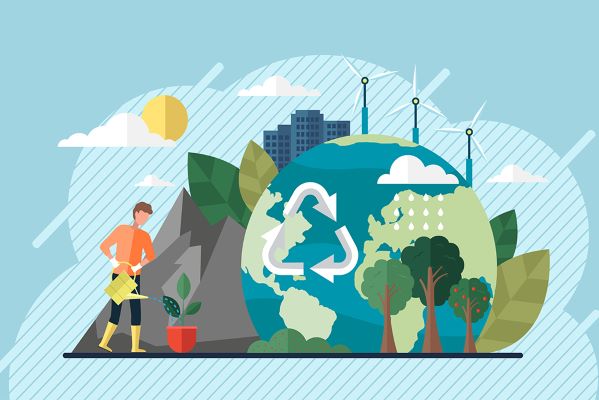
In recent years, climate change has become one of the most worrisome issues in society. Consequently, there have been growing calls for innovative tools or approaches that can assist in the mitigation of emissions responsible for climate change. According to the Paris Agreement on sustainable development, “accelerating, encouraging and enabling innovation is critical for an effective, long-term global response to climate change”. Recognizing the negative impact of equipment that use fossil fuels to generate greenhouse gas emissions have on the environment, innovation has led to the establishment of energy-efficient manufacturing technologies, renewable energy equipment, and carbon capture and storage technologies that can assist in the reduction of greenhouse gas emissions from activities carried out by manufacturing technology companies.
Conclusion
From the foregoing, innovation and society are intertwined. In a society where creativity, openness and collaboration are encouraged, then innovation thrives. In return, society enjoys the benefits when innovation focuses on solving existing human challenges. For instance, innovations that contribute to economic growth, and address healthcare, and climate change issues have become an important aspect in our society. Given the dynamic nature of our society, humans should embrace innovation and ensure that their skills are in line with the innovations that are being established. By so doing, no individual will be worried about job losses resulting from innovation.